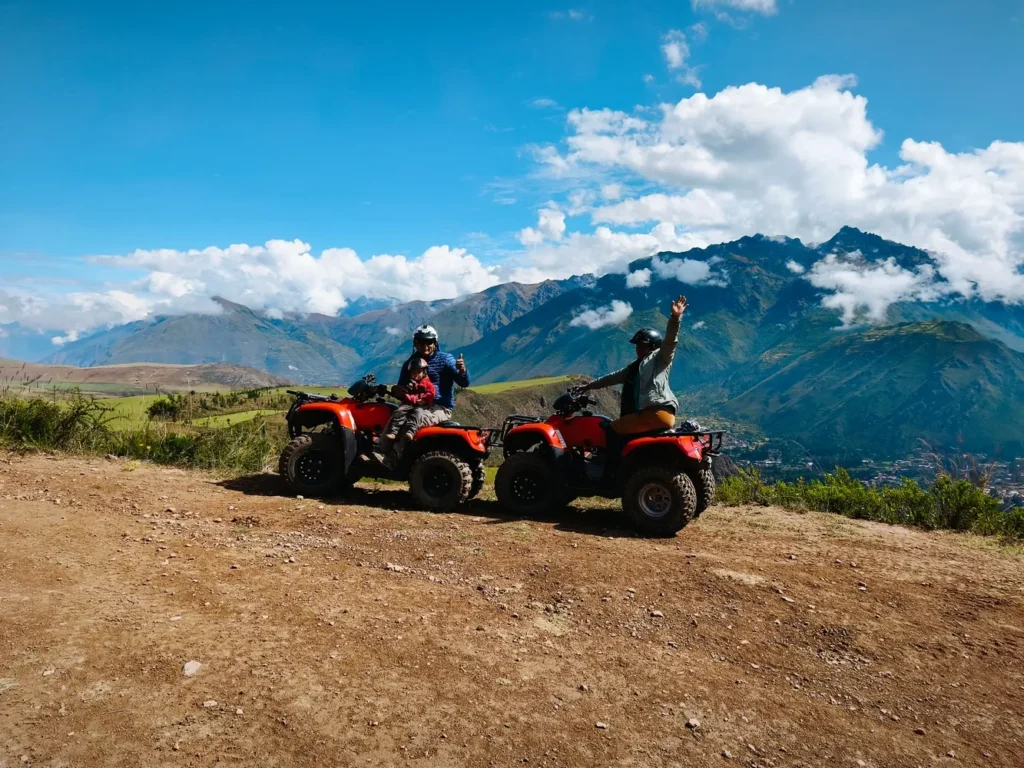
Most people overpack for the wrong things. They bring hiking poles and a second fleece, then forget the sunscreen and the small bills they need at the entrance booth. This guide covers what to pack for an ATV tour in Cusco: one base list that works on all four of our routes, plus the few extras each route actually needs. We pick riders up between 5 and 6 AM, so it’s also written for packing the night before, half asleep.
Table of Contents
The short version
If you only read one section, read this one. This is the core of what to pack for an ATV tour in Cusco, and it’s what we check for at hotel pickup:
- Closed-toe shoes with grip (sneakers are fine)
- A base layer plus a jacket you can take off by 10 AM
- Sunscreen, sunglasses and a cap or hat
- Cash in soles, in small bills, for entrance fees
- A small backpack you can wear while riding, with 1–1.5 L of water
- Your passport or a copy of it
- A buff or bandana for dust
That’s it for the half-day routes. Rainbow Mountain needs more, and we cover that further down.
What to pack for an ATV tour in Cusco, item by item
Shoes
Closed-toe and grippy. You’ll be stepping on and off the ATV on loose gravel, walking short stretches between stops, and on some routes crossing dirt that’s either powdery or muddy depending on the month. Running shoes or light hiking shoes are perfect. Sandals and Crocs are a no on every route, even in the warmer months: one slip of the foot near the footrest and you’ll understand why.
Layers, not a big coat
Cusco sits at about 3,400 m. At 6 AM it’s cold, often 2–5 °C in the dry months, and by 11 AM the sun can feel hot on your arms. A thin thermal or long-sleeve shirt plus a fleece or light down jacket covers it. Add a windbreaker if you have one. You’ll strip down as the morning goes on, which is why the backpack matters.
Sun protection
This is the item people regret skipping. UV levels rise roughly 10–12% for every 1,000 m of altitude, according to Cancer Council, and you’re riding between 3,400 and 5,200 m depending on the route. Cool air hides it. Bring SPF 30 or higher, put it on before pickup, and pack it so you can reapply at a stop. Sunglasses do double duty here: they also keep dust out of your eyes.
Cash in soles
Entrance fees are paid separately on most routes, in cash, at the site. Card machines are rare and often don’t work. Rough amounts:
- Maras Salt Mines: around S/20
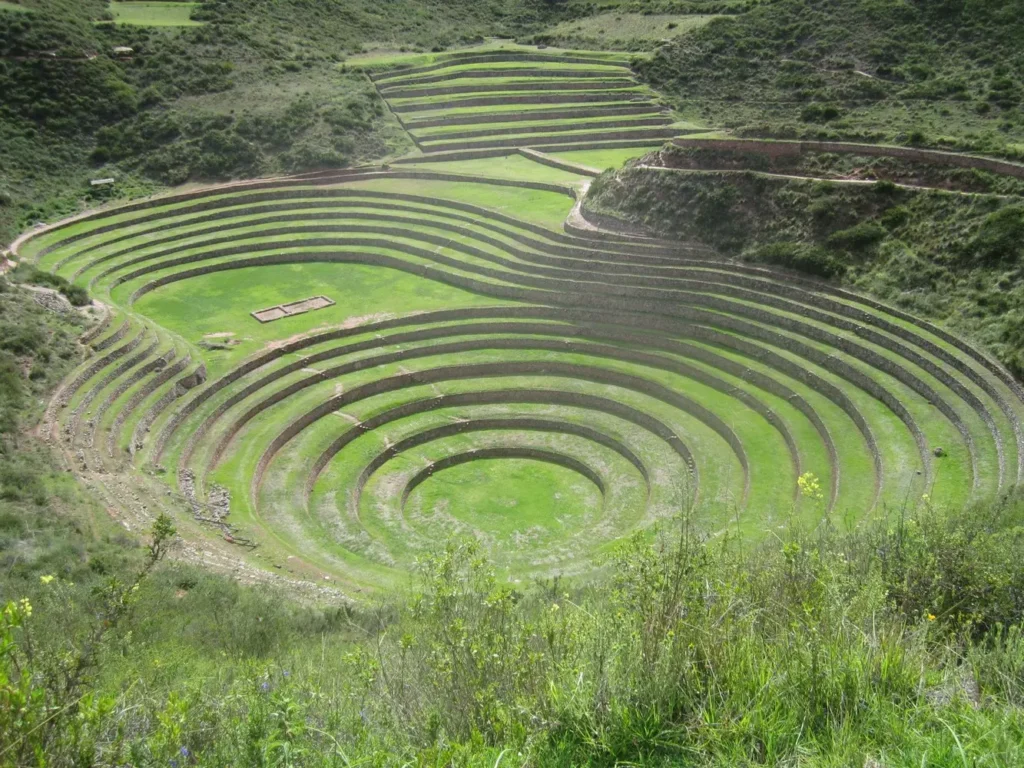
- Moray: covered by the Cusco Tourist Ticket (Boleto Turístico), bought in advance
- Huaypo Lagoon: around S/3–5
- Rainbow Mountain: around S/25, plus S/20–30 if you add the Red Valley
- Morada de los Dioses: already included in the tour price
Bring 10s and 20s. Booths often can’t break a 100 or a 200.
A small backpack and water
Something with two straps that sits snug on your back. A tote bag or a loose camera bag swinging around your neck gets annoying fast on a bumpy track. For the half-day routes, 1–1.5 liters of water is plenty.
Passport or ID
You need it if your route passes through a site on the Boleto Turístico, and it’s sensible to carry at any protected site in the region. A photo on your phone works at most checkpoints, but carry the real thing if you can.
Phone or camera, protected from dust
Dust gets into everything, especially from June to September. A zip-lock bag for your phone between stops costs nothing and saves you from grit in the charging port. If you bring a proper camera, add a lens cloth.
What we give you at the base
Riding gear isn’t part of what to pack for an ATV tour in Cusco, because we supply it. At the ATV base every rider gets a helmet and gloves, then a safety briefing and a practice run on flat ground before we head out. You can choose to drive your own ATV or ride as a passenger on a shared one; you decide on the spot after trying it. There’s one guide for every 8 riders, and the guide carries the group’s first-aid kit and supplemental oxygen.
If you’ve never ridden before, our guide to ATV tours in Cusco for beginners walks through what the first 20 minutes look like.
Extras by route
Maras, Moray & the Salt Mines
The dustiest of the four. A buff or bandana over your nose and mouth makes a real difference on the dirt roads between Moray and the salt pools. The altitude is close to Cusco’s, so the base list is enough otherwise. Route details are on the Maras, Moray & Salt Mines ATV tour page.
Huaypo Lagoon
It’s windier at the lagoon than in Cusco, so this is the route where a windbreaker earns its place. If you plan to rent a kayak or paddle boat at the shore, pack a dry bag or at least a plastic bag for your phone and a spare pair of socks. More on the route: ATV tour to Huaypo Lagoon.
Morada de los Dioses
Our shortest outing, about 3–4 hours. The base list is enough. The one thing to add is battery: the stone sculptures are the most photographed stop we run, and phones die fast in the cold. See the Morada de los Dioses ATV tour for times.
Rainbow Mountain
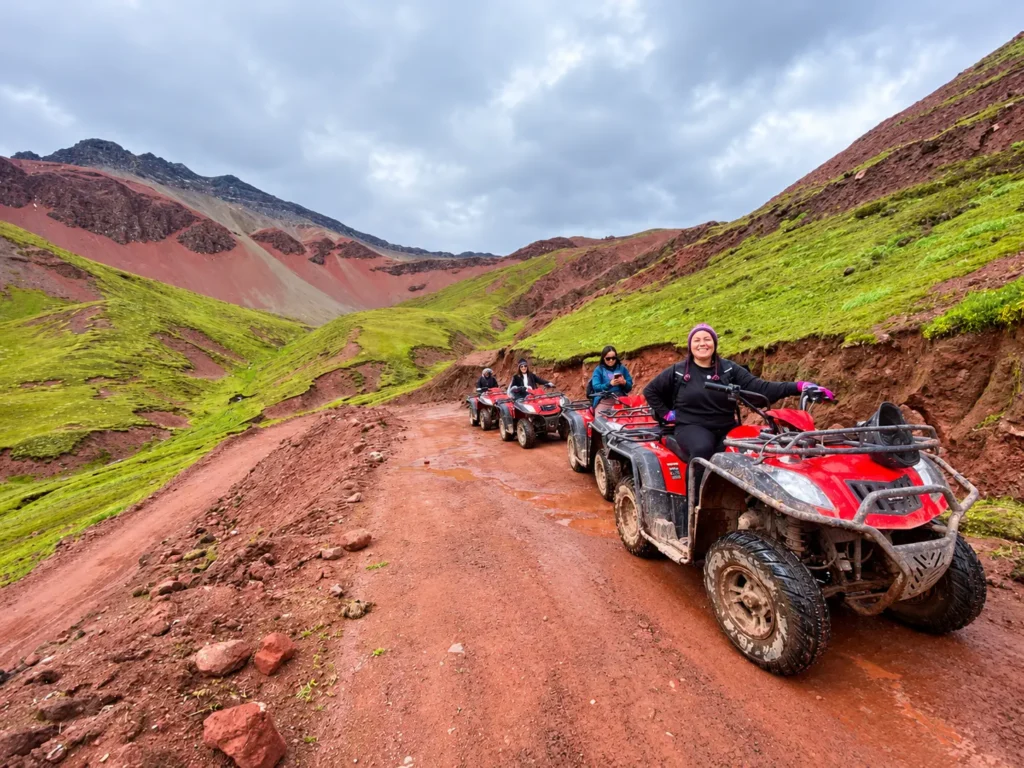
This is the one route where what to pack for an ATV tour in Cusco really changes. You spend most of the day above 4,000 m and reach 5,020–5,200 m at the viewpoint, and before sunrise it can be below freezing. Add:
- A warm mid-layer and a waterproof outer jacket
- Gloves of your own for the walk (ours are riding gloves) and a beanie that covers your ears
- SPF 50 if you have it, and a lip balm with SPF
- Shoes with ankle support for the last 1–2 km on foot
- 1.5–2 liters of water, because it’s a 12–14 hour day
- Cash for the community entrance fee, and for a horse on the last stretch if you think you’ll want one
Breakfast and lunch are included on this route, so you don’t need to pack food beyond a snack you like. The full itinerary is on the Rainbow Mountain ATV tour page, and if altitude worries you, read altitude sickness and ATV tours before you book.
Dry season vs. rainy season
The season changes what to pack for an ATV tour in Cusco almost as much as the route does. Our dry season runs from April to October. Expect dust instead of mud, very cold early mornings and clear afternoons. Pack for cold at 6 AM and sun at noon, and bring the buff.
From November to March, showers usually arrive in the afternoon. Add a waterproof jacket on every route, accept that your shoes will get muddy, and keep a plastic bag in your backpack for anything that can’t get wet. Rainbow Mountain is the route most affected by weather in these months. Our month-by-month guide to the best time for ATV tours in Cusco goes deeper.
Leave these at the hotel
- Hiking poles. You’re riding, not trekking the whole way.
- Heavy mountaineering boots. Overkill, and awkward on the footrest.
- A big first-aid kit. Bring your personal medication; the guide has the rest. Our safety standards page lists what we carry.
- Jewelry and anything you’d hate to lose in the dirt.
- A full-size suitcase. If you’re checking out of your hotel that day, ask them to store it.
FAQs: what to pack for an ATV tour in Cusco
Do I need special ATV riding gear?
No. Helmets and gloves are provided at the base. Regular outdoor clothes and closed-toe shoes are all you need.
What do people forget most often?
Sunscreen, then small bills. Both cause problems before lunchtime.
Can I wear shorts?
On the half-day routes in the dry season, yes, though long trousers protect your legs from dust and the sun. On Rainbow Mountain, wear long trousers.
Do I need cash on every tour?
On three of the four. Morada de los Dioses includes the entrance; the others charge on site in soles.
Is it really that cold at Rainbow Mountain?
Yes. It’s the only route where we regularly see frost before sunrise. Dress for winter at the start and summer at noon.
Still unsure about one item on your list of what to pack for an ATV tour in Cusco? Send us a photo of it on WhatsApp the night before and we’ll tell you whether it’s worth carrying.