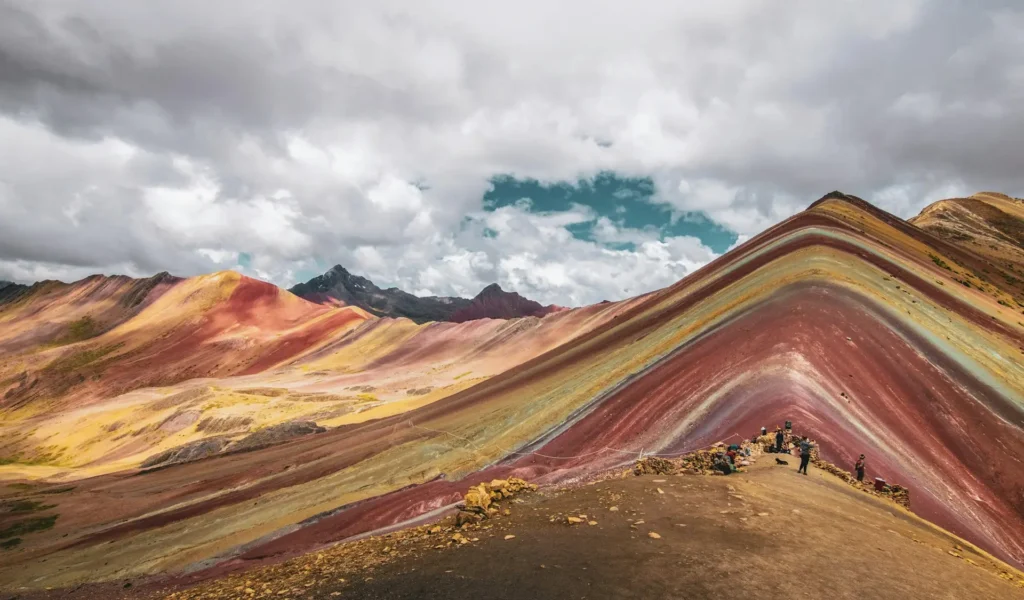
You land in Cusco, walk up the stairs from the baggage hall, and your heart is already going faster than it should. That’s normal. The city sits at 3,399 m (11,152 ft), and every one of our routes starts there or higher. This guide covers altitude sickness and ATV tours specifically: what changes when you ride instead of hike, which route to do first, and what we do on the trail if someone starts to feel bad.
Table of Contents
What altitude sickness actually is
Altitude sickness, or acute mountain sickness (AMS), is what happens when you go up faster than your body can adjust to thinner air. In Cusco each breath carries roughly a third less oxygen than at sea level. At Rainbow Mountain, above 5,000 m, it’s close to half. People in the Andes call it soroche.
The usual symptoms show up 6 to 24 hours after you arrive:
- Headache, often the first sign
- Tiredness that feels out of proportion
- Nausea or loss of appetite
- Dizziness
- Bad sleep
- Getting out of breath on small slopes
Most cases are mild and fade in a day or two. A few signs are not mild and mean going down and getting medical help straight away: confusion, losing balance, breathlessness while resting, or a wet cough. Those point to the rare but serious forms, HAPE (fluid in the lungs) and HACE (swelling of the brain).
One thing surprises people every season: fitness doesn’t protect you. Marathon runners get it, and people who rarely exercise sometimes don’t. How fast you go up matters far more than how fit you are.
Altitude sickness and ATV tours: what’s different from hiking
Most altitude advice online is written for trekkers. Riding changes part of the picture, not all of it.
What gets easier. On an ATV you aren’t climbing for hours with your heart rate at its limit. That sustained effort is exactly what makes hikers feel worse at altitude. Riding is active, but it isn’t aerobic exercise, so you arrive at the viewpoint with energy left over.
What stays the same. The air is just as thin whether you rode or walked. On Rainbow Mountain there’s still a 1–2 km walk at the end, at over 5,000 m, and that’s where symptoms usually show up.
What can catch you out. Early starts, cold wind and the excitement of driving can hide a headache until you stop. Pay attention to how you feel at each stop, not just while you’re riding.
So the honest version is this: altitude sickness and ATV tours are a better combination than altitude sickness and long hikes, but the ATV doesn’t make the altitude go away.
Altitude by route
With altitude sickness and ATV tours, the route you pick matters more than anything else you pack. Not all our tours carry the same risk. Here are the maximum altitudes, from lowest to highest:
- Maras, Moray & the Salt Mines: about 3,385 m. Same as Cusco. Fine on your first or second day.
- Huaypo Lagoon: about 3,750 m. A little higher than the city, still comfortable early in your trip.
- Morada de los Dioses: about 3,850 m. Short, with little physical effort.
- Rainbow Mountain: 5,020–5,200 m. The highest point you’ll reach in the region, and the one to leave for later.

If this is your first time above 3,000 m, start with the Maras, Moray & Salt Mines ATV tour or Morada de los Dioses in your first days. The Huaypo Lagoon ATV tour also works early on. Save the Rainbow Mountain ATV tour for day three or later.
A simple plan for your first days
Day 1: Arrive, check in, walk slowly. Eat a light dinner, skip alcohol, drink water. Don’t plan anything for the afternoon.
Day 2: A short city walk or a low tour like Morada de los Dioses or Maras Moray. Notice how you feel on the hills of San Blas.
Day 3 or later: If you slept reasonably and have no headache, you’re ready for Rainbow Mountain. If you still feel rough, ask us about moving it back a day. Rainbow Mountain is much better on a good day than a forced one.
How to prepare
Before you travel
If you have a heart or lung condition, high blood pressure, or you’re pregnant, talk to your doctor before the trip, not just before a tour. Some travellers get a prescription for acetazolamide (Diamox), which can help the body adjust faster. That’s a decision for you and your doctor. The CDC’s guide to high-altitude travel is a good, plain-language starting point for that conversation.
In Cusco, before your tour
- Go slowly. Cusco is steep, and the stairs feel twice as long as they look.
- Drink more water than you think you need.
- Avoid alcohol for the first two nights.
- Eat lighter meals with plenty of carbohydrates.
- Try coca tea (mate de coca). It’s what locals drink, and many travellers find it helps with mild symptoms, even if there’s no strong scientific proof behind it.
On the morning of the tour
We pick you up between 5 and 6 AM. Before that:
- Drink a glass of water before you leave the hotel.
- Eat something small, even if you’re not hungry.
- Wear layers. Cold makes everything feel worse at altitude.
- Bring any medication you’ve been prescribed.
Our what to pack for an ATV tour in Cusco checklist has the full list.
What we do on the trail
Some of altitude sickness and ATV tours is out of your hands, so here’s what our side looks like. Our guides carry supplemental oxygen and a first-aid kit, and there’s one guide for every 8 riders, so someone is always close enough to notice if you go quiet or pale. Before the ride, tell the guide if you slept badly or already have a headache. It changes how they watch the day.
If you feel unwell during the tour:
- Tell the guide straight away. Even a mild headache. It’s information, not a complaint.
- Stop and rest. Sit, breathe slowly, drink water.
- Use the oxygen if the guide offers it. It eases symptoms for a while; it doesn’t cure them.
- Go down. If symptoms don’t improve or get worse, descending is the treatment that works. On Rainbow Mountain that means skipping the last walk and heading back to the vehicle.
Nobody is judged for turning back. It happens, and the guide will make it simple. Our safety standards page explains the full protocol.

Children and older travellers
Our minimum age is 15 to drive. Teenagers usually adapt well, but they don’t always say when they feel bad, so watch for unusual quietness, no appetite or irritability. For older travellers, the bigger question is the heart. If you have any cardiac history, get medical clearance before booking Rainbow Mountain, and consider the lower routes instead.
FAQs about altitude sickness and ATV tours
How long does it take to acclimatize to Cusco?
Most people feel noticeably better after 24–48 hours. Full adaptation takes longer, which is why we suggest at least two days in Cusco before Rainbow Mountain.
Can I do an ATV tour on my first day in Cusco?
On the lower routes, many people do. Maras Moray and Morada de los Dioses stay close to Cusco’s altitude. We wouldn’t recommend Rainbow Mountain on day one.
Is riding an ATV worse for altitude than hiking?
No. Riding is less demanding than hiking, which tends to help. The altitude itself is the same, though, so the same precautions apply.
Which ATV tour is safest for altitude?
Maras, Moray & the Salt Mines, at about 3,385 m. Morada de los Dioses (about 3,850 m) is the shortest outing if you’d rather keep the day brief.
Should I take Diamox?
Only with a doctor’s advice. It’s a prescription medicine, and it isn’t right for everyone.
Can I cancel if I feel sick on the day?
Message us on WhatsApp as early as you can so we can talk through your options. Riding while unwell at altitude isn’t worth it.
Plan your routes around the altitude
Altitude sickness and ATV tours don’t have to be a worry if you put your routes in the right order: low ones first, Rainbow Mountain last. If you tell us your arrival date and how many days you have, we’ll suggest the order that gives you the best chance of feeling good. Write to us on WhatsApp, and if you’re weighing up Rainbow Mountain in particular, read is ATV Rainbow Mountain safe? next.