We only run ATV tours, so you might expect this to be a one-sided comparison. It isn’t. Some places around Cusco are better on foot, and we’ll tell you which ones. Others make much more sense on an ATV. Choosing between ATV vs hiking in Cusco comes down to three things: how many days you have, how much effort you want to spend at altitude, and which place you’re trying to reach. Here’s how it plays out, destination by destination.
Table of Contents
ATV vs hiking in Cusco: what actually changes
It isn’t simply “easy versus hard”. The two formats spend your energy in different ways.
Hiking puts you on the ground for hours. You feel every metre of climb, you stop when you like, and reaching a viewpoint on your own legs is the whole point for a lot of people. The cost is time and effort: most good day hikes around Cusco mean two to four hours of walking, often above 4,000 m, where each breath carries far less oxygen than at sea level.
An ATV covers the same kind of ground in a fraction of the time. You’re driving, not sitting on a bus, so it’s still active and you still feel the cold, the dust and the bumps. What drops is the sustained effort on your heart and lungs. The trade-off: some places still end with a walk, and the sense of having earned the view is different.
Neither is better across the board. They suit different days of the same trip.
Rainbow Mountain: the classic ATV vs hiking question
This is where the question comes up most, so here are the real numbers.
| Standard hike | Our ATV tour | |
|---|---|---|
| Walking, round trip | 6–8 km | about 1–2 km |
| Hard effort at altitude | 2–3 hours | 30–50 minutes |
| Start | before dawn | before dawn |
| Viewpoint altitude | 5,020–5,200 m | 5,020–5,200 m |
| Price | varies by agency, usually lower | $80 shared, breakfast and lunch included |
What surprises people is that the ATV version still ends on foot. The local communities don’t allow vehicles near the summit, so everyone walks the last 1–2 km. The difference is that you skip the long climb from the parking area, and you reach the final stretch with energy left.
Hike it if you want the traditional trek, you’re fit, you’ve had a few days to acclimatize, and budget matters.
Ride it if your time in Cusco is short, your group has mixed fitness, or you’d like to see the mountain without spending the day fighting for breath. Details on the Rainbow Mountain ATV tour, and how to get to Rainbow Mountain compares hiking, ATV and horses side by side.

Humantay Lake: hike it
We’ll say it plainly: Humantay Lake is a walk. There’s no ATV route there that we’d recommend, and the hike is short enough that it doesn’t need one. From the Soraypampa trailhead you climb to a turquoise lake at about 4,200 m under the Salkantay glacier. Most people take around one and a half to two hours to go up, slowly.
It also works well as a stepping stone. If you plan to do Humantay and Rainbow Mountain, do Humantay first, with a rest day before the bigger one.
The Sacred Valley: where the ATV makes sense
The Sacred Valley is the opposite case. The country between Maras, Moray and the salt pools is open farmland and dirt roads at around 3,385 m. That’s great ATV terrain. On foot, it’s a long, flat walk between sites, with the best parts at the ends.
Our Maras, Moray & Salt Mines ATV tour links the Inca terraces of Moray and the Maras salt pools in a single half-day. The Huaypo Lagoon ATV tour rides through farmland to a lake with snow peaks behind it, and you can add the Salt Mines on a private tour.
Walk it if you want a slow day through villages and don’t mind a long, mostly flat route.
Ride it if you’d rather see Moray, the salt pools or Huaypo in a morning and still have the afternoon free.
Short outings close to Cusco
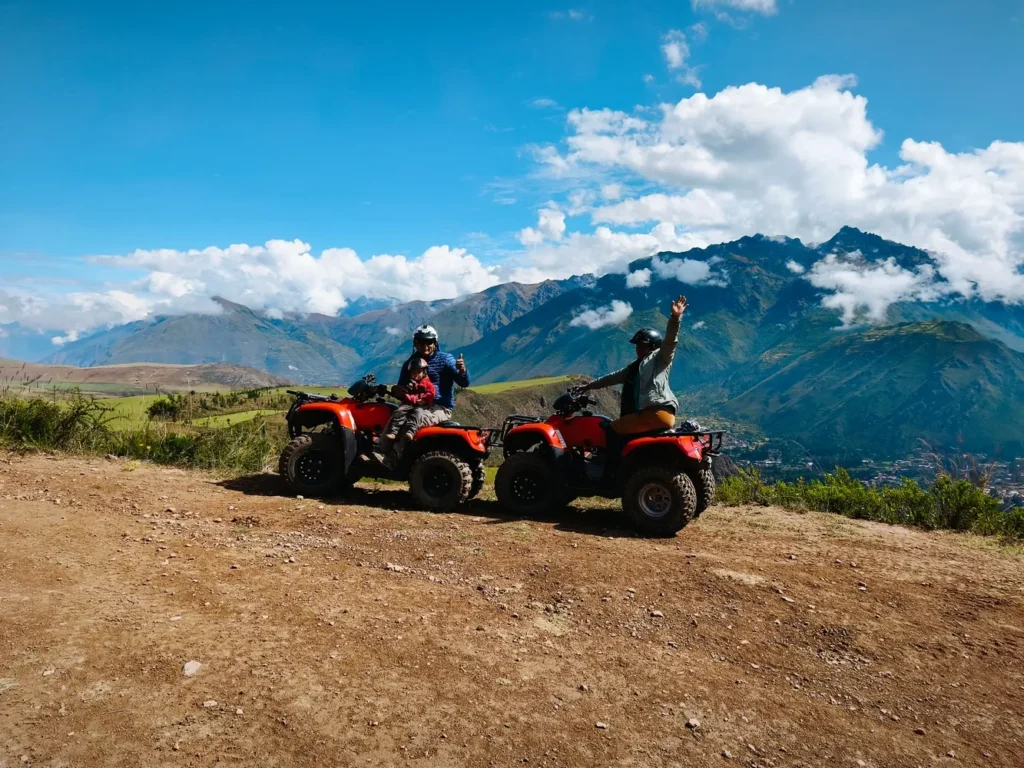
If you only have a morning, Morada de los Dioses is our shortest route: 3–4 hours from Cusco and back, with 45–90 minutes of riding to the stone sculptures. There isn’t really a hiking equivalent that fits the same few hours. It’s also a good way to find out whether you enjoy riding before you commit to a full day.
Multi-day treks: outside the ATV vs hiking in Cusco debate
The Inca Trail and the Salkantay Trek to Machu Picchu aren’t really part of the comparison. They’re multi-day treks with their own permits, schedules and goals, and nobody should swap one for a half-day ride. Worth knowing: the classic Inca Trail closes every February for maintenance.
Where they do connect is planning. Plenty of travellers fit a lower ATV day in before or after a long trek, when their legs want a break but they’d still like to get out of the city.
ATV vs hiking in Cusco: five questions to decide
- How many days do you have in Cusco? Four or five days: lean ATV for the long, high days. A week or more: you have room for both.
- How fit are you, honestly? Comfortable with three hours of uphill walking above 4,000 m? Hiking is very doable. If not, the ATV takes most of that load away.
- Is your group mixed? Teenagers and grandparents, runners and non-runners: an ATV keeps everyone together. Our minimum age to drive is 15, and anyone can choose at the base to ride as a passenger.
- Do you care more about the journey or the place? If the effort is the point, hike. If the view is the point, ride.
- How does altitude treat you? If you don’t know yet, less effort at altitude is one less thing to manage. Our guide to altitude sickness and ATV tours explains why.
Doing both on one trip
Most people who ask about ATV vs hiking in Cusco end up doing both. A sensible order:
- Days 1–2: settle into Cusco; Morada de los Dioses if you want to get out.
- Day 3: Maras, Moray & Salt Mines or Huaypo Lagoon by ATV.
- Day 4: Humantay Lake on foot.
- Day 5: rest, or an easy day in the city.
- Day 6: Rainbow Mountain by ATV.
Spacing the high days apart helps more than any gear. The Peru Travel site, run by PromPerú, is useful for filling in the rest of your Cusco days.
A note on photos
Hiking lets you stop anywhere. On an ATV, photo stops happen at set points along the route and at each site, because a group of vehicles can’t pull over every 200 metres. If you’re a serious photographer, a private tour lets you agree on extra stops in advance; our comparison of private vs group ATV tours explains how.
FAQs about ATV vs hiking in Cusco
Is ATV or hiking better for Rainbow Mountain?
It depends on time and fitness. The ATV cuts walking from 6–8 km to 1–2 km. Hiking suits fit travellers who want the full trek and have acclimatized well.
Are the hikes around Cusco hard for beginners?
The trails are rarely technical. The altitude is what makes them hard, so a moderate walk feels much tougher than it would at home. Give yourself at least two days in Cusco first.
Is an ATV safer than hiking at altitude?
The altitude risk is the same, because it comes from the height, not the way you got there. The ATV lowers the effort; it adds a vehicle to handle, which is why every tour starts with a practice run. More in is ATV Rainbow Mountain safe?
Do I need to be fit for an ATV tour?
Not especially. The riding is active but not exhausting. Altitude tolerance matters more than fitness.
Can I do both on the same trip?
Yes, and it’s usually the best plan: ATV for the Sacred Valley and Rainbow Mountain, on foot for Humantay.
Is hiking cheaper?
Usually, yes, on the routes where both exist. Our shared prices are on each tour page: Maras Moray $38, Huaypo Lagoon $35, Morada de los Dioses about $25 and Rainbow Mountain $80.
Still weighing ATV vs hiking in Cusco? Send us your dates and how active you want your trip to be on WhatsApp, and we’ll suggest which days to ride and which to walk.