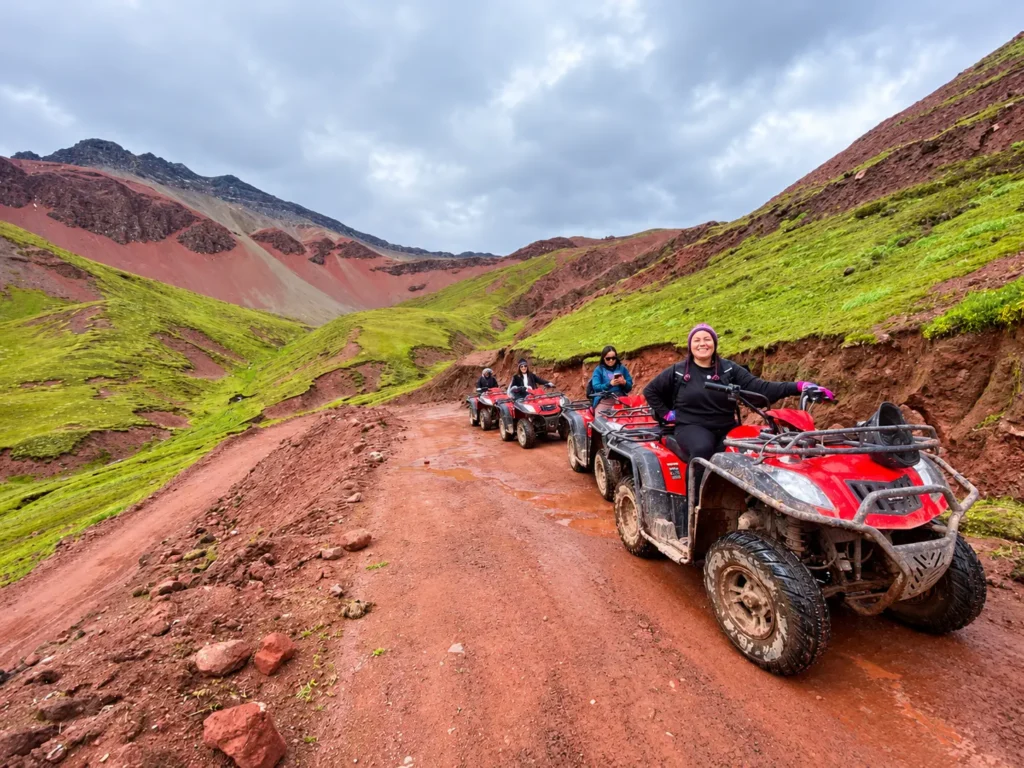
We run ATV tours to Rainbow Mountain, so you’d expect us to say it’s perfectly safe and move on. It isn’t perfectly safe, and nowhere at 5,000 m is. But the risks are specific and well understood, and most of them are in your hands. So, is ATV Rainbow Mountain safe? For a healthy, acclimatized traveller with a careful operator, yes. This guide explains what actually goes wrong up there, what the ATV changes and what it doesn’t, and the seven things that make the biggest difference.
Table of Contents
Is ATV Rainbow Mountain safe? The short answer
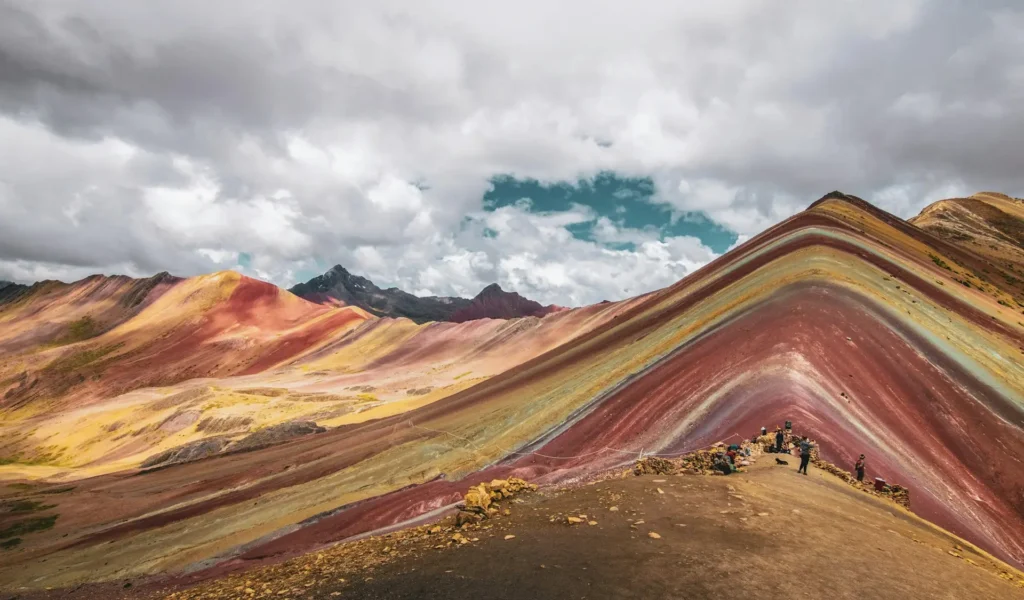
Vinicunca, the mountain everyone calls Rainbow Mountain, gets a very large number of visitors every year, and nearly all of them have a long, cold, uneventful day. When something does go wrong, it’s almost never the riding. It’s one of two things:
- Altitude. The viewpoint is at 5,020–5,200 m, depending on where it’s measured. The air holds roughly half the oxygen it does at sea level.
- Weather. Afternoon storms build quickly over the high plains, and lightning on an exposed ridge is dangerous for everyone.
The ATV itself adds a small, manageable risk of its own, which we cover below.
What has gone wrong at Rainbow Mountain
We’d rather you read this from us than find it on a forum at midnight. A few cases have made the news:
- March 2024: lightning struck a group on Vinicunca on a Sunday afternoon. A Peruvian guide was killed and six French tourists were taken to hospital in Cusco with burns, according to the Jamaica Observer and other agencies.
- June 2018: a 70-year-old American visitor who’d had heart surgery two years earlier fainted on the climb and died at a hospital in Pitumarca district, as Peru Reports covered at the time.
- Other deaths reported over the years follow the same two patterns: heart or altitude problems in people pushing hard on the climb, and storms in the afternoon.
None of these involved an ATV. That doesn’t make the ATV irrelevant, but it shows where the real danger sits.
Altitude: the main risk
Most visitors arrive in Cusco from sea level, and many book Rainbow Mountain for their second day. That’s the most common mistake we see. Cusco is at 3,399 m; the high plains on our route are above 4,500 m; the viewpoint is higher again.
Acute mountain sickness, soroche in the Andes, starts with headache, nausea, tiredness and poor sleep. It can hit fit, young people as easily as anyone. The warning signs that mean “go down now” are different:
- confusion or odd behaviour
- trouble walking in a straight line
- breathlessness while sitting still
- vomiting that won’t stop
Our guide to altitude sickness and ATV tours explains symptoms and acclimatization in more detail. The CDC’s page on high-altitude travel is the reference we trust for the medical side.
Weather and lightning
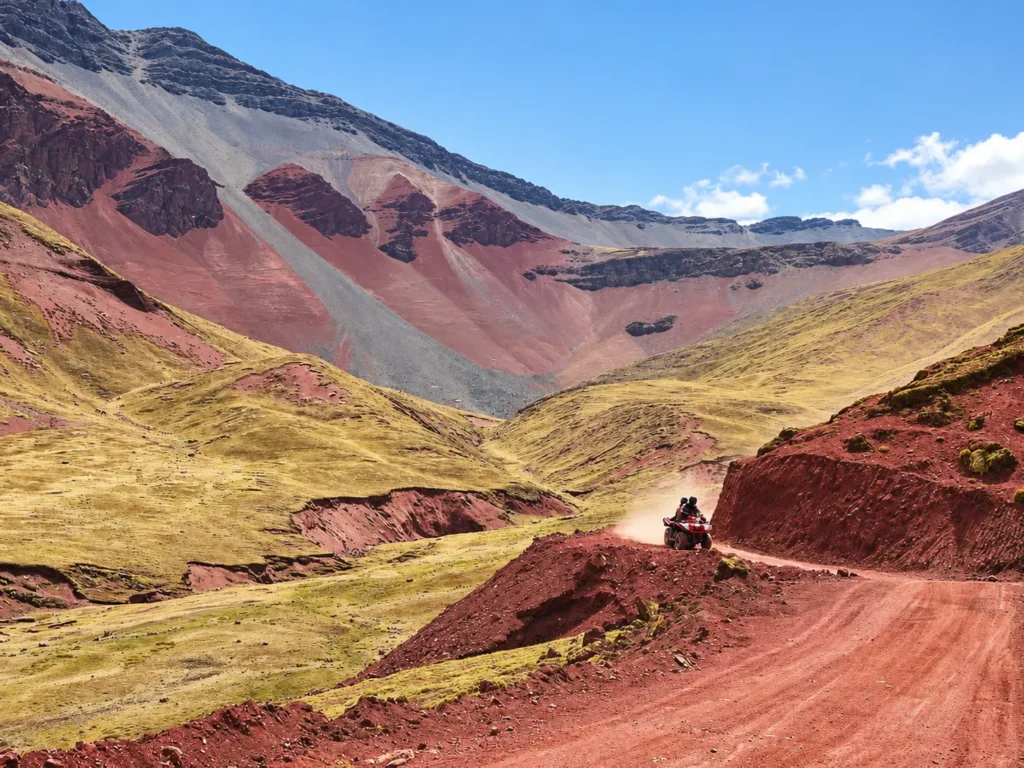
From November to March, storms on the high plains are common, and they usually arrive after midday. Snow and hail can fall near the viewpoint in any month, though it’s far more likely in the rainy season.
That’s the main reason Rainbow Mountain tours leave Cusco before dawn, ours included. The aim is to be at the viewpoint in the morning and heading down before clouds stack up over Ausangate. Better photos are a side effect.
If thunder starts while you’re on the ridge, don’t wait for one more picture. Get off the high ground with your guide. Our month-by-month guide to the best time for ATV tours in Cusco shows which months carry the most weather risk on this route.
Is ATV Rainbow Mountain safe compared with hiking?
In some ways it’s safer, in one way it’s different, and in one important way it’s exactly the same.
What the ATV improves
On the standard tour you hike 6–8 km round trip at altitude. On ours, the ATV covers most of that and you walk about 1–2 km at the end. Hard effort at altitude is what drives heart rate and breathing up, so cutting two or three hours of climbing to 30–50 minutes of walking leaves most people with far more in reserve. If you start to feel unwell, you also have the energy to turn round.
What the ATV adds
You’re driving an off-road vehicle on dirt tracks, some of them rutted. That’s why every ride starts with a safety briefing and a practice run on flat ground, and why helmets and gloves are handed out before anyone starts an engine. Our minimum age to drive is 15. If you’d rather not drive, you can choose at the base to ride as a passenger. First time on an ATV? Read our guide to ATV tours in Cusco for beginners.
What stays the same
The last 1–2 km to the viewpoint is on foot for everyone; the communities don’t allow vehicles further. So the altitude at the top and the exposure to storms are identical whether you rode or hiked.
7 things that keep Rainbow Mountain safe
These are listed in the order we think they matter.
- Spend at least two days in Cusco first. Do a lower route such as Maras, Moray & the Salt Mines or Morada de los Dioses on those days, and leave Rainbow Mountain for day three or later.
- Tell your guide how you feel, early. A headache mentioned at the base is easy to manage. One hidden until the ridge isn’t.
- Go with an operator that carries oxygen and a first-aid kit. Ours does, with one guide for every 8 riders at most.
- Turn back if the warning signs appear. Skipping the last walk is the right call, not a failure.
- Leave early and respect the sky. Morning at the top, down before the afternoon storms.
- Drink water and skip the pisco the night before. Dehydration and alcohol make altitude symptoms worse.
- See a doctor first if you have a heart or lung condition, however fit you feel otherwise.
Who should think twice
Being direct is more useful than being polite here. We’d suggest talking to a doctor, and to us, before booking if you:
- have a heart or lung condition, or high blood pressure that isn’t under control
- are pregnant
- have had severe altitude sickness before
- are only in Cusco for one or two days
For a short trip, the Huaypo Lagoon ATV tour or Maras Moray give you a full day of riding without going near 5,000 m.
How to check an operator’s safety
Price tells you very little. Ask these questions instead, and expect specific answers:
- Do your guides carry oxygen and a first-aid kit on every tour?
- How many riders per guide?
- What time do you leave Cusco, and why then?
- What happens if someone feels ill near the top?
- Is there a practice run before the real ride?
Our own answers are on the safety standards page. Any operator that gets irritated by these questions, or answers with “don’t worry, it’s totally safe”, has told you something useful.
FAQs: is ATV Rainbow Mountain safe?
Has anyone died at Rainbow Mountain?
Yes. A small number of deaths have been reported over the past decade, mostly from lightning and from heart or altitude problems. Against the number of visitors, the risk is low for healthy, acclimatized travellers.
Is Rainbow Mountain safe for older travellers?
Many older travellers do it, and the ATV helps because it removes most of the climb. The main concern is the heart. Get medical clearance first if you have any cardiac history.
What if I get altitude sickness on the tour?
Tell your guide straight away. Mild symptoms usually ease with rest, water and oxygen. If they get worse, you go down; that means skipping the final walk and heading back to the vehicles.
Is it safe to ride an ATV if I’ve never driven one?
Yes, if you take the practice run seriously and ride at the pace the guide sets. Plenty of our riders are first-timers.
Is Rainbow Mountain safe in the rainy season?
It’s more weather-dependent. Snow, hail and afternoon storms are more likely from November to March, so the early start matters even more.
What’s included in your Rainbow Mountain tour?
Hotel pickup before dawn, the ATV, helmet and gloves, guide, breakfast and lunch, for $80 per person in a shared group. The community entrance, about S/25, is paid in cash. Full details on the Rainbow Mountain ATV tour page, and how to get to Rainbow Mountain compares it with hiking and horses.
So, is ATV Rainbow Mountain safe for you? If you’re still unsure, send us your arrival date and any health worries on WhatsApp. We’ll tell you honestly whether this route fits your trip, or whether a lower one would suit you better.